December 9, 2025
Circles of healing spread from ashes in Washington
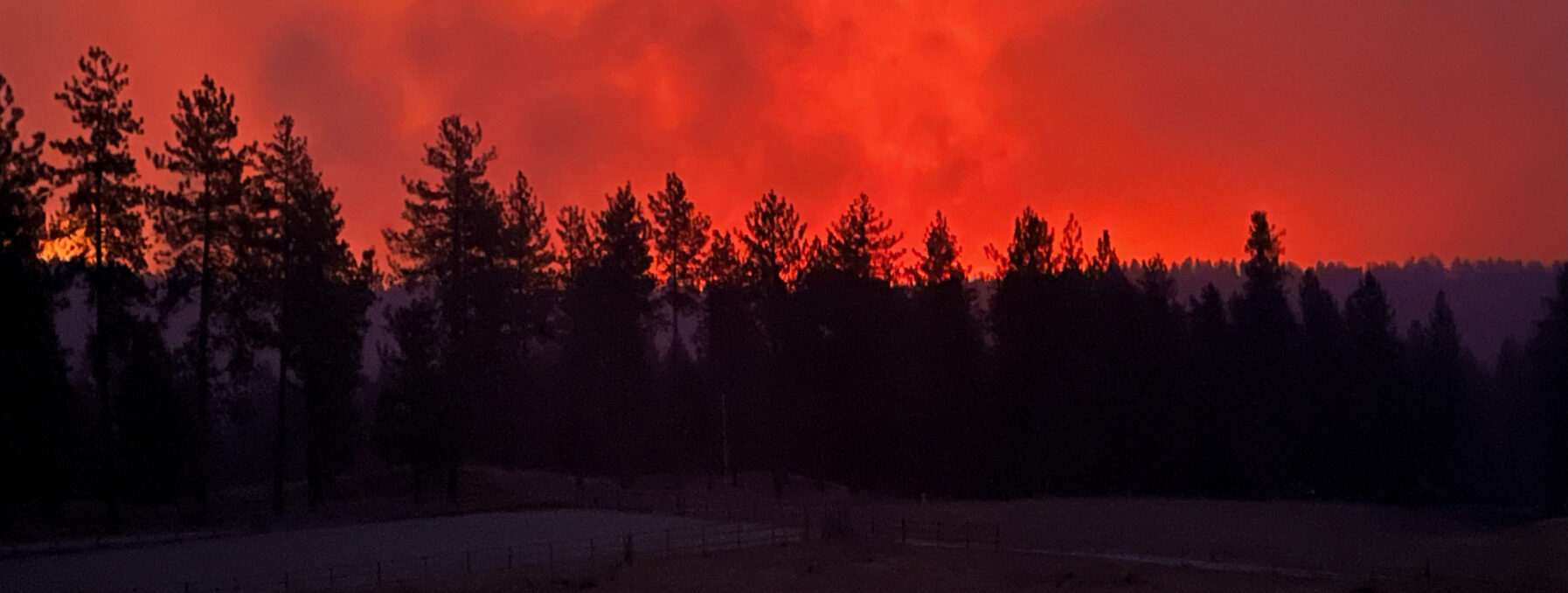
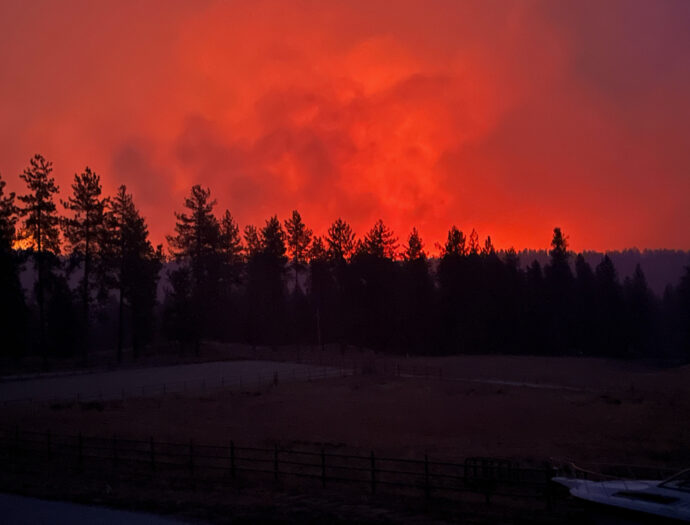
Fire photo from Karen Anderson - native of Elk, WA
Knoty knew the fire was coming. The wolf was frantically pacing, using his own language to warn his humans, Native Carpino and Bill Zimmerle at their home in Elk, Washington.

He leaped into their truck, and Carpino and Zimmerle finally followed, gathering their five dogs and a few belongings.
A few minutes later, on Aug. 18, 2023, the Oregon Road Fire would consume their home in the foothills of the Selkirk Mountains, north of Spokane, Washington. One of the most destructive fires in the state’s history, the fire burned 260 homes and more than 10,000 acres.
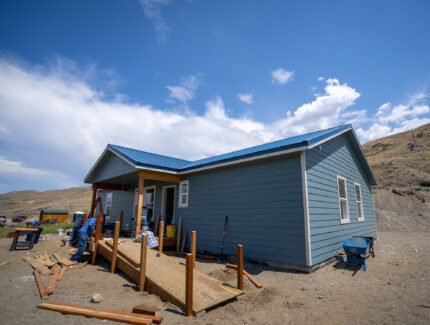
By early December 2025, Mennonite Disaster Service (MDS) volunteers were building a new home for the family—an answer to what Carpino, both a Choctaw native and Sicilian, described as “a lot of prayers to the Creator.”
As Knoty, Carpino’s spirit walker, stayed close by her, she shared how thankful she is for the volunteers, and for the aspects of their lives that were spared from the fire.
“It made its way around my garden—and didn’t touch it at all—so I was very, very thankful, because that’s where my medicine is housed,” she said.
Zimmerle shared how Knoty, which means “walking with bears” in Choctaw, came to be rescued. “My granddaughter found him, almost starved to death, tied to a tractor tire,” he said.
Once rescued by his humans, Knoty, in turn, rescued them from the fire.
Carpino and Zimmerle have been in Elk for more than 40 years. “We are a fourth generation—all four generations lived here before the fire, and all were dispersed. We’re the sole standers but we’re not going anywhere.”
A surviving spirit
On the same road, situated in rugged terrain still deeply scarred by the fire, more than 90 houses were destroyed or damaged—and neighbors continue to rescue each other in small and large ways.
MDS volunteers were also working on the outside of Steve Van Buskirk’s new home, despite freezing temperatures and snow. Van Buskirk, who was living in a small travel trailer, came by to see the progress—and the volunteers—almost every day.
“It’s amazing how fast they are and how good they are,” he said. “They know exactly what they are doing.” He barely escaped the fire, managing to salvage his dog, Charlie, and his yellow Volkswagen beetle, easily spotted on the winding roads by his neighbors. “For three or four days after the fire, I could not speak to anyone without crying really hard,” he said.
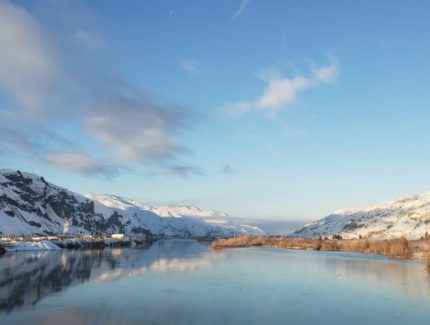
Sadly, his 10-year-old dog passed away recently. But 73-year-old Van Buskirk, who lives alone, said that he is able to express his grief now. He looked at the small frozen pond in front of the house under construction. “I’ve got goldfish in that pond, and they survived the fire,” he said, pointing to the burned edges of a metal border surrounding the water.
“The goldfish survive the winter, too, under the ice, so in the spring I will have them again,” he said.
Amid scars, “God moments”
MDS is working in close partnership with the Spokane Regional Long Term Recovery Committee, which was created shortly after the fire. With five new houses currently underway, the committee oversaw the construction of eight new houses last year.
Craig Sanders, the committee’s executive director, shares the pain and the hope with the fire survivors. “I used to live out here,” he said. “One of the houses we’re building—his daughter and my kids were best friends going to school.”
He looked out at the forest. “It’s just scarred,” he said. “There are still so many needs.”
With MDS supplying volunteers to build houses, the need for shelter will be met sooner.
As volunteers go and come from their base—a Salvation Army camp in Loon Lake, Washington—MDS Project Director Rollin Ulrich offers words of quiet encouragement.
“Now is your chance to go out again and be the church in this community, and anticipate the God sightings where they may be,” he said. Each day, volunteers report more “God sightings”: the sun peeking out from an overcast winter day, the spectacular view of the snow-covered mountains from on top of a ladder, a hug from a homeowner who didn’t talk much before.
In fact, hearing the stories of homeowners is an important part of MDS response, said Ulrich.“At MDS, we often say we are the hands and feet of Jesus,” he said. “I would say, we are also the ears of Jesus because we listen out there.”
For volunteer Bryan Mierau, from Goshen, Indiana, what deeply connects volunteers across the MDS family is a sense of unity in service. “In January, this room will be filled with different people,” he said, gesturing around the dining area, which held 26 volunteers that day. “What is it that carries continuity?”
In a challenging setting—working in freezing temperatures on homes that are a 45-minute, often snowy, drive from the base camp—continuity resides in the volunteers’ ability to walk humbly as they serve in a community vastly different from their own.
“This gives feet and hands to what it means to walk humbly with our God,” Mierau said.
And each volunteer returns home carrying the gift of a deeper question to unwrap, he added: “Will it give me insight into being a little different?”
News & Stories
See More News & Stories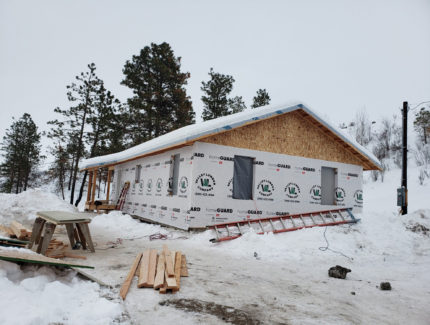
Videos