June 23, 2026
Why Crisfield? “Because the need is still there”
Generations of flooding—and generations of volunteers. Crisfield, Maryland, has seen them both.
Located on the Eastern Shore of the Chesapeake Bay in Maryland, Crisfield has had more than its share of repeat flooding. For Mennonite Disaster Service (MDS), response in Crisfield first began in October 2021, when Superstorm Sandy damaged or destroyed the majority of homes in the small town, home to 2,500 people.
On June 16, the same day Maryland Department of Emergency Management Secretary
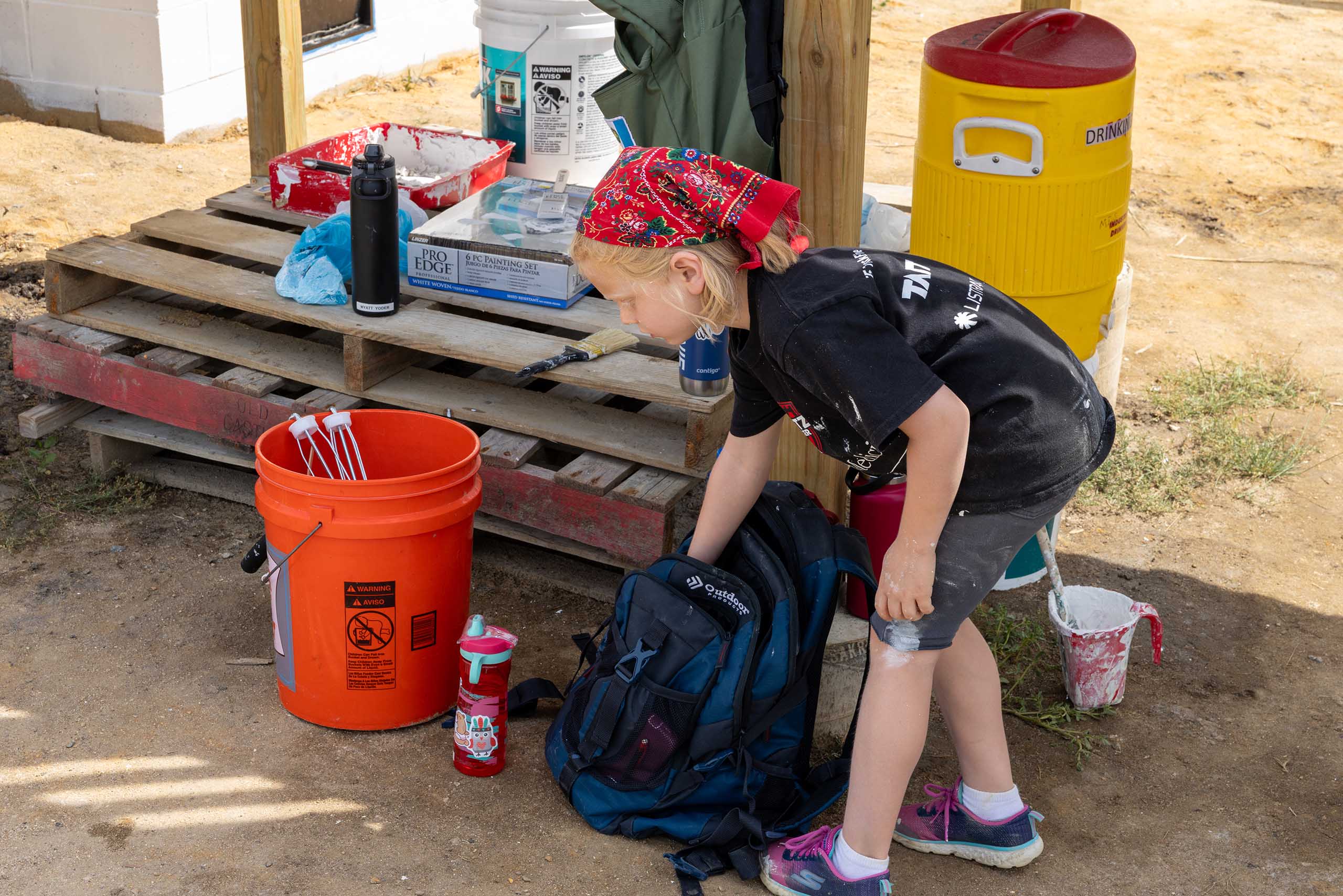
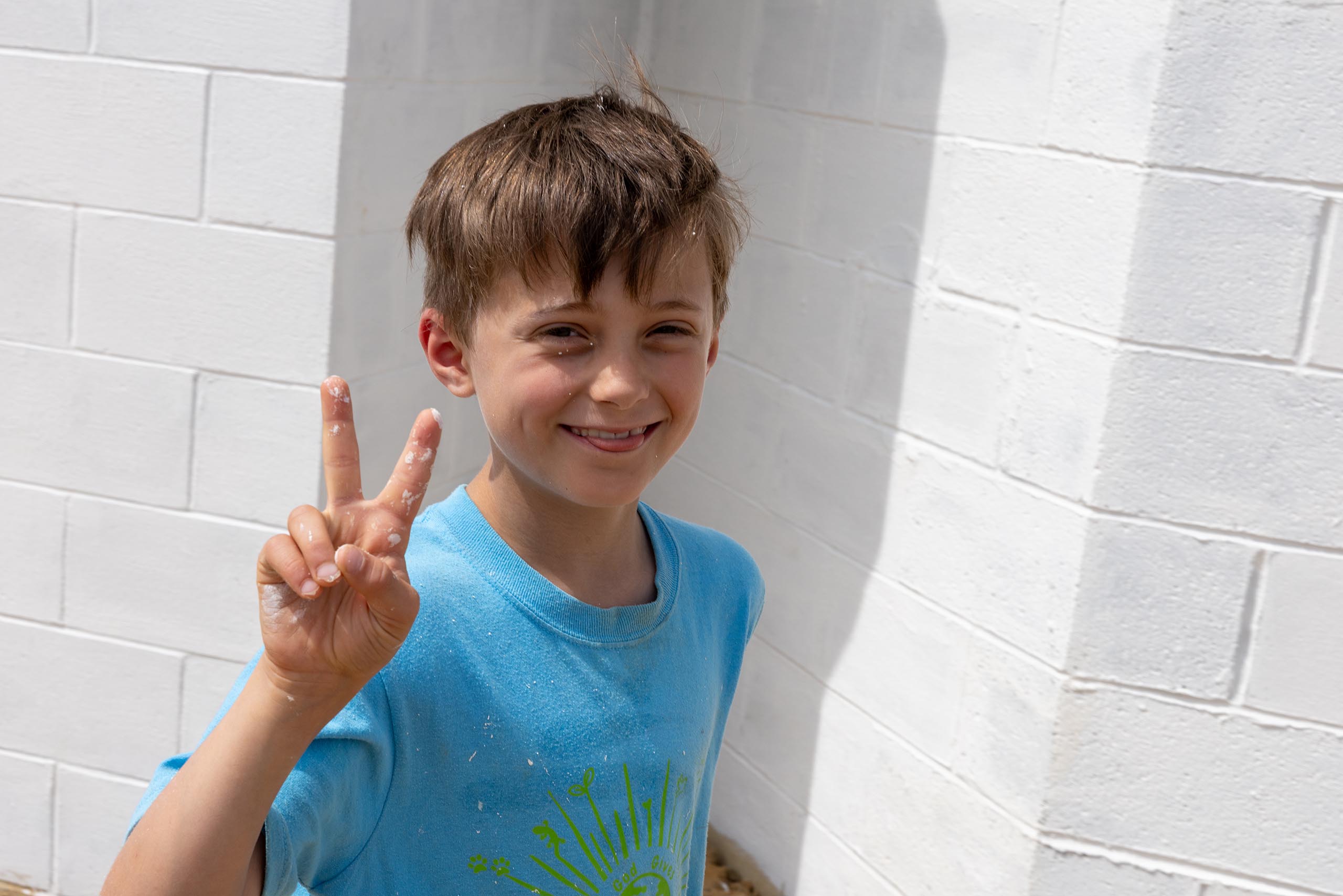
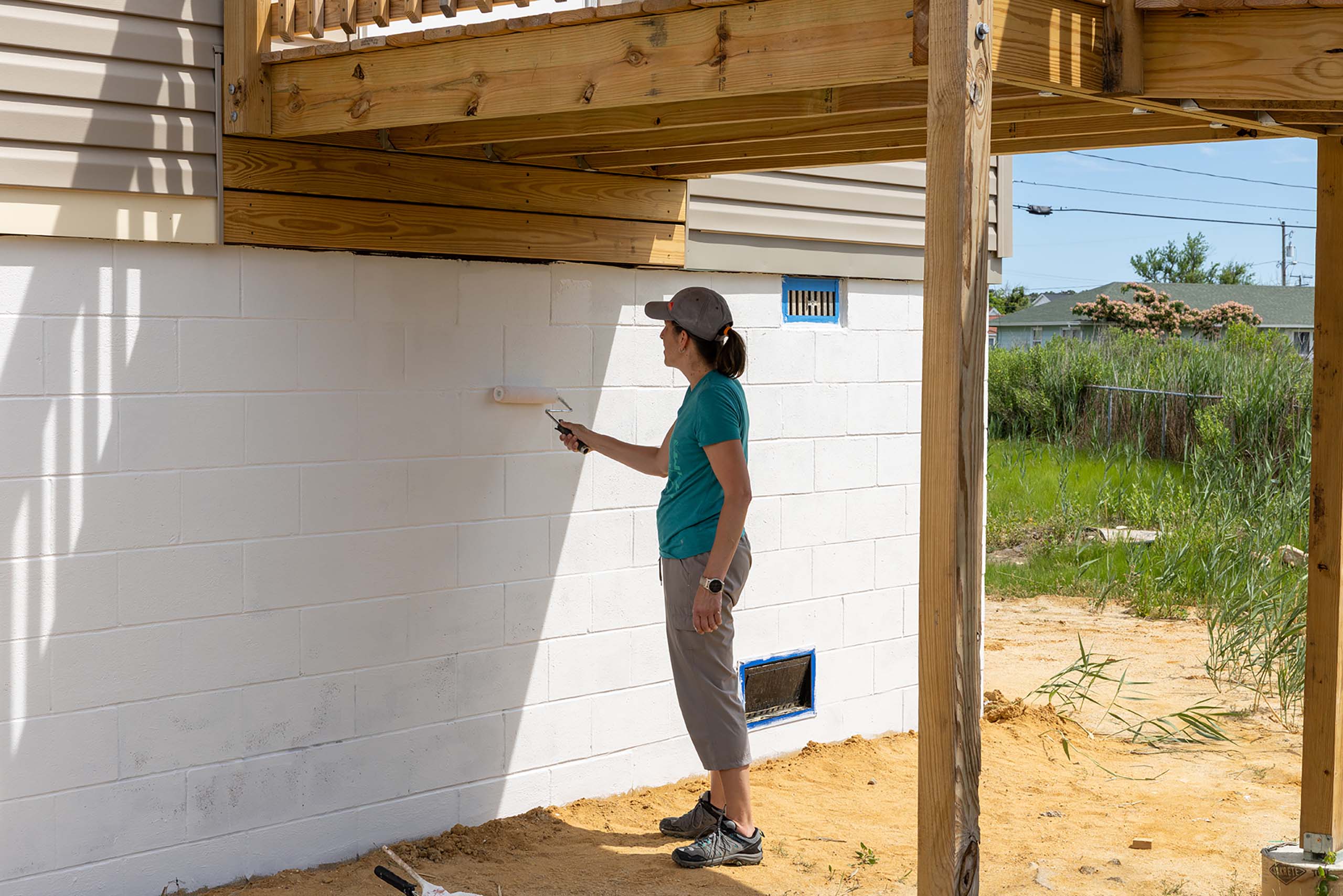
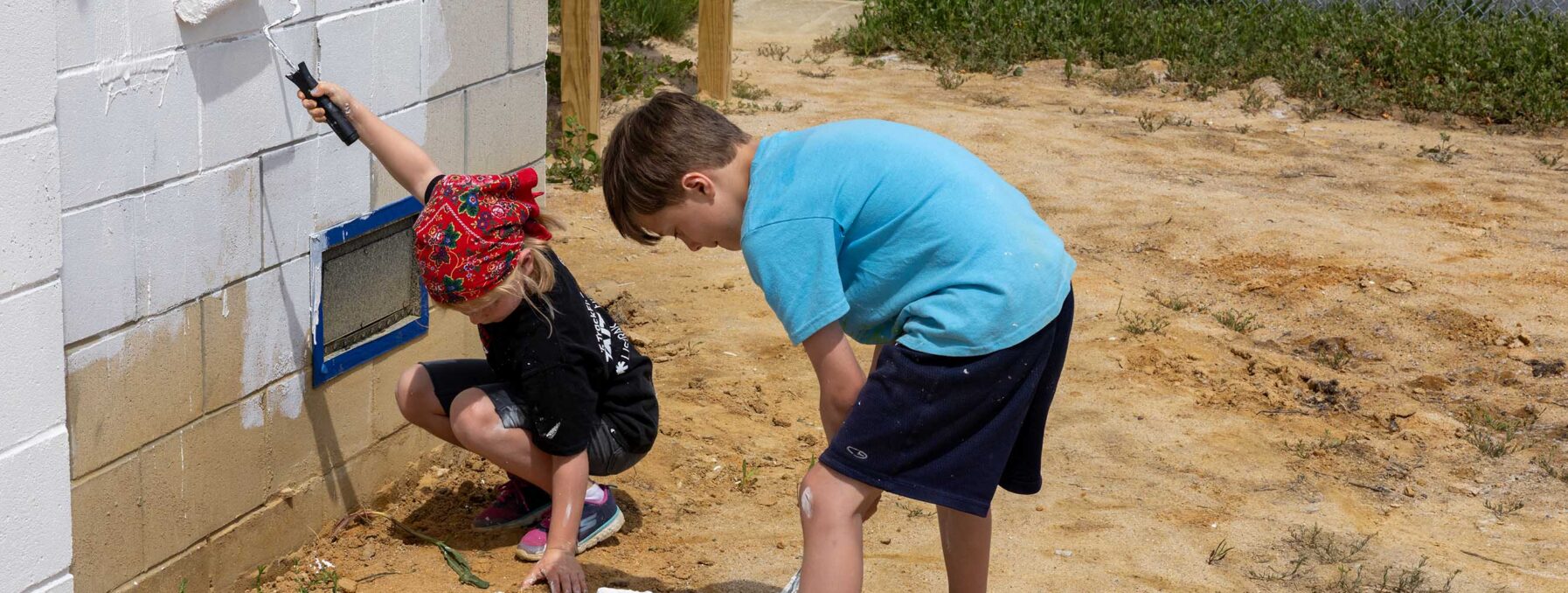
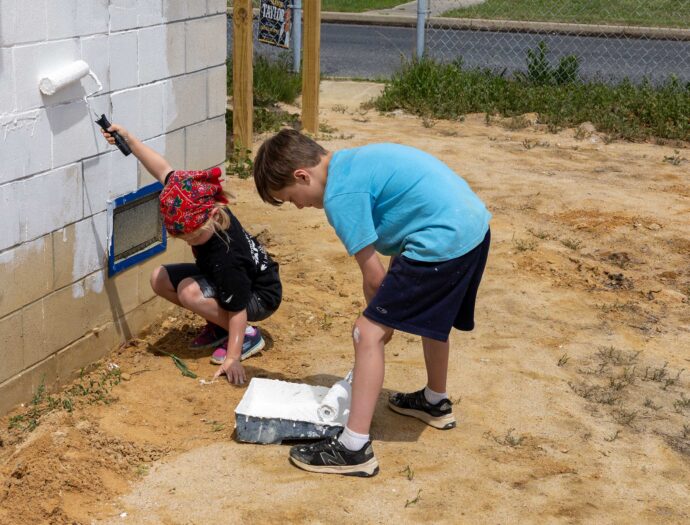
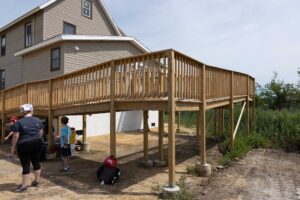
Russell Strickland was touring a disaster migration response in which MDS has been involved, some very young MDS volunteers were busy painting an elevated, newly repaired home.
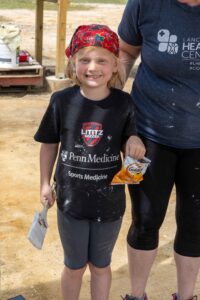
As she carefully aimed a roller of white paint on the block foundation of a home, Ellie Yoder, 6, reflected: “I don’t know if I’ve painted a house before!”
Her brother, Wyatt, 8, added: “This is our second coat.”
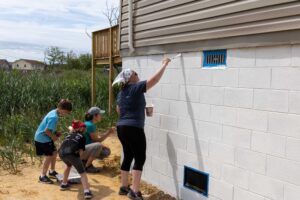
Ellie, Wyatt, and their parents were volunteering as a family, part of a group of 25 volunteers from the Rossmere Mennonite Church in Lancaster County, Pa. They are the latest—and among the youngest—of a long legacy of service in Crisfield.
MDS built 21 homes in Crisfield in the wake of Sandy. From 2013 to the present, nearly 3,000 MDS volunteers have served in Crisfield, some for ongoing recovery from Sandy, others for repeat flooding in the ensuing years, when MDS was invited back after a break.
Larry Stoner, currently serving as project coordinator for Crisfield, who also was an MDS regional coordinator for 12 years, acknowledged that the response in Crisfield is unique, and MDS’s commitment has run deep.
“People question: why do we continue to do this? My answer is: because the need is here,” he said.
Building back better
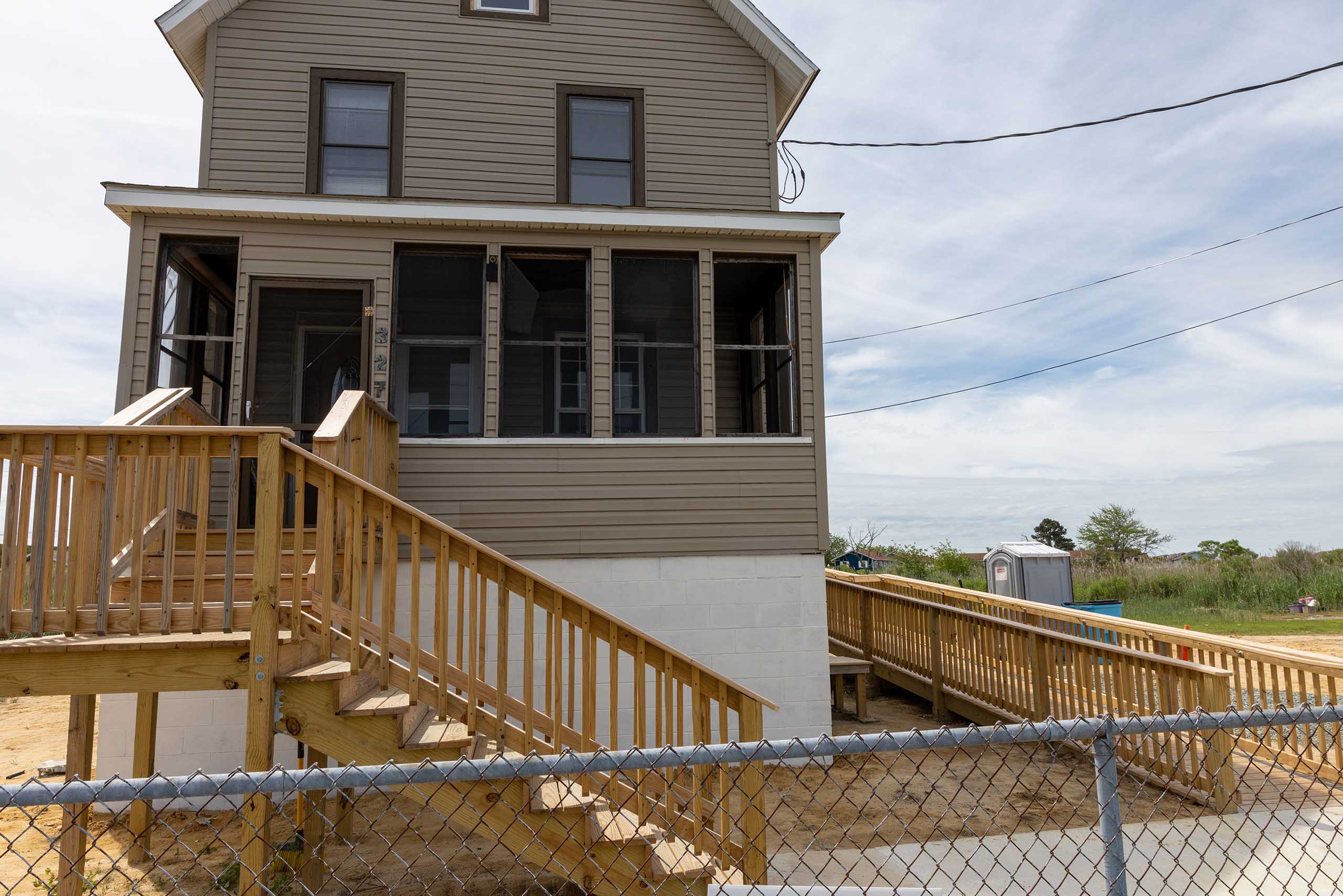
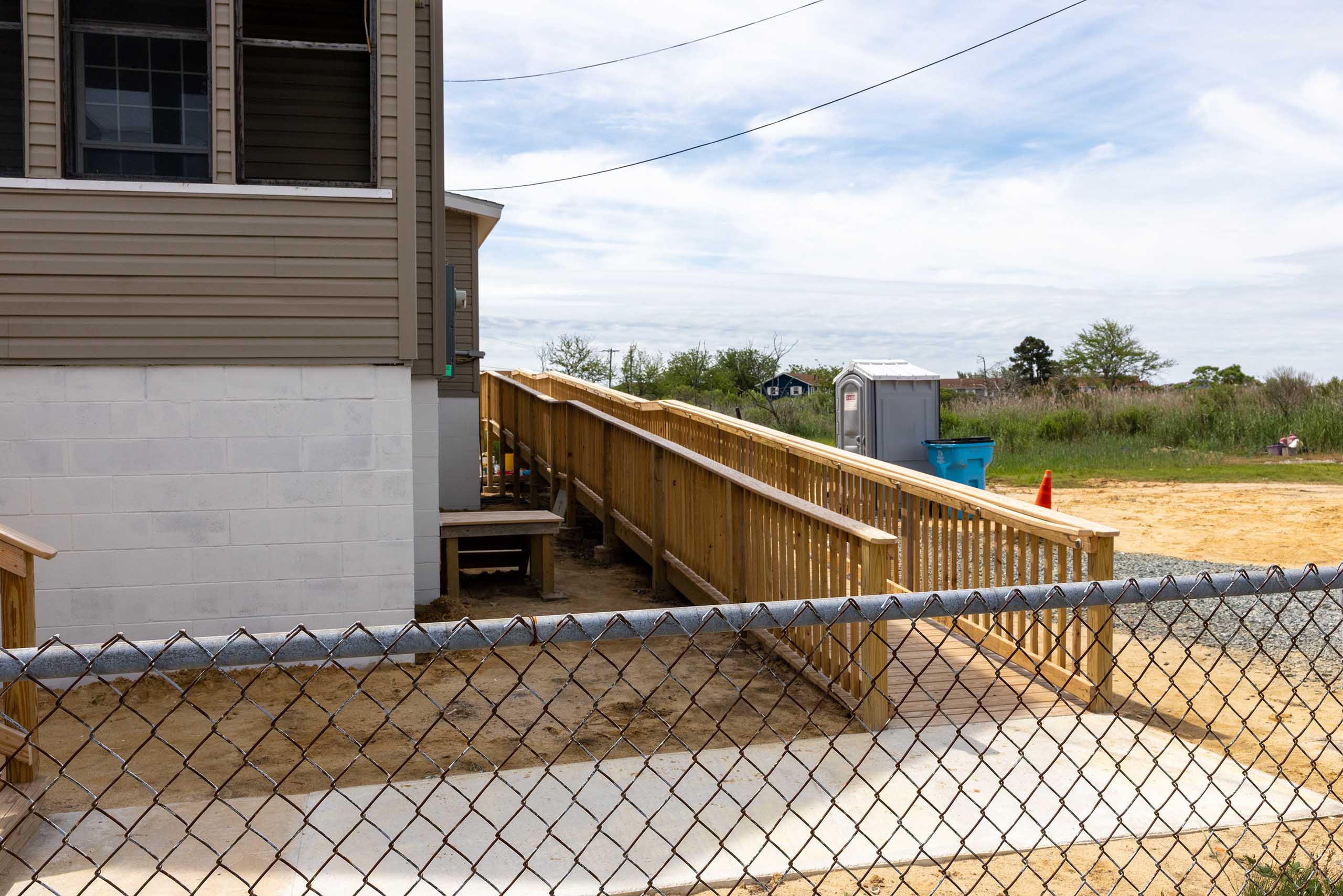
The latest round of response in Crisfield has a unique aspect of disaster mitigation. MDS is part of a consortium of organizations—all invited by the Eastern Shore Long Term Recovery Committee—working together to elevate homes in Crisfield above the floodplain.
“We are preparing to elevate not only homes but the quality of living for people,” said Pastor Phil Huber, chair of the Maryland Voluntary Organizations Active in Disaster.
It’s the mitigation aspect that has attracted the attention of many churches that want to help.
Rev. Amy Lawrence, pastor at Manokin Presbyterian Church in Princess Anne, Maryland, is also a member of the Eastern Shore Long Term Recovery Committee. The New Castle Presbytery has contributed funds and has involved churches in a wide regional swath.
“This project feels innovative in that it’s taking mitigation and recovery together,” she said. “We see a willingness to try something new and different.”
Secretary Strickland, who teared up when he talked about Crisfield, held the response up as an example of people forming a community—to help another community.
“Right now, we’ve got to do everything we can to bring our communities together to support other communities,” he said. “Resilience and mitigation, and creating these local recovery groups—the big thing is to really, really thank you all for that you are doing.”
Crisfield Mayor Darlene Taylor, who was born and raised in the town, said that the work of volunteers has been a fantastic boost for the residents. “Over the years, when the water came, they swept it out,” she said—and mold grew up the walls, a health hazard for many.
“To be able to have the opportunity to have a new house, or an elevated house—I’m forever grateful,” she said.
MDS Executive Director Kevin King said that the elevated homes will finally end the trauma for many people who worried every time it rained, or every time the tide rose. “Together, we are helping to end generational poverty,” he said.
Photo Gallery